Launch offer — valid today only

📄 Digital book in PDF · read it on your phone or print it

Domestic LPG Installation in Drawings: From the Cylinder to the CoC One Topic on Every Page

How LPG behaves, cylinder siting, regulators and hoses, pipework, ventilation, leak and pressure testing, commissioning and the Certificate of Conformity. Every topic has its own page: the drawing first, then what you need to remember. 68 illustrated pages.

START STUDYING THIS WAY

🔒 Secure checkout · PDF by email · 30-day guarantee

Every topic, its own pageEvery distance, clearance and test step drawn, with the explanation beside it
68 illustrated pages9 parts, from how LPG behaves to the night before the theory assessment
Up-to-date sourcesSANS 10087-1, the Pressure Equipment Regulations and the OHS Act 85 of 1993
PDF by emailFormat

Look Inside the Book

Every page has one big drawing and a box with the distances, pressures and steps you need to know:

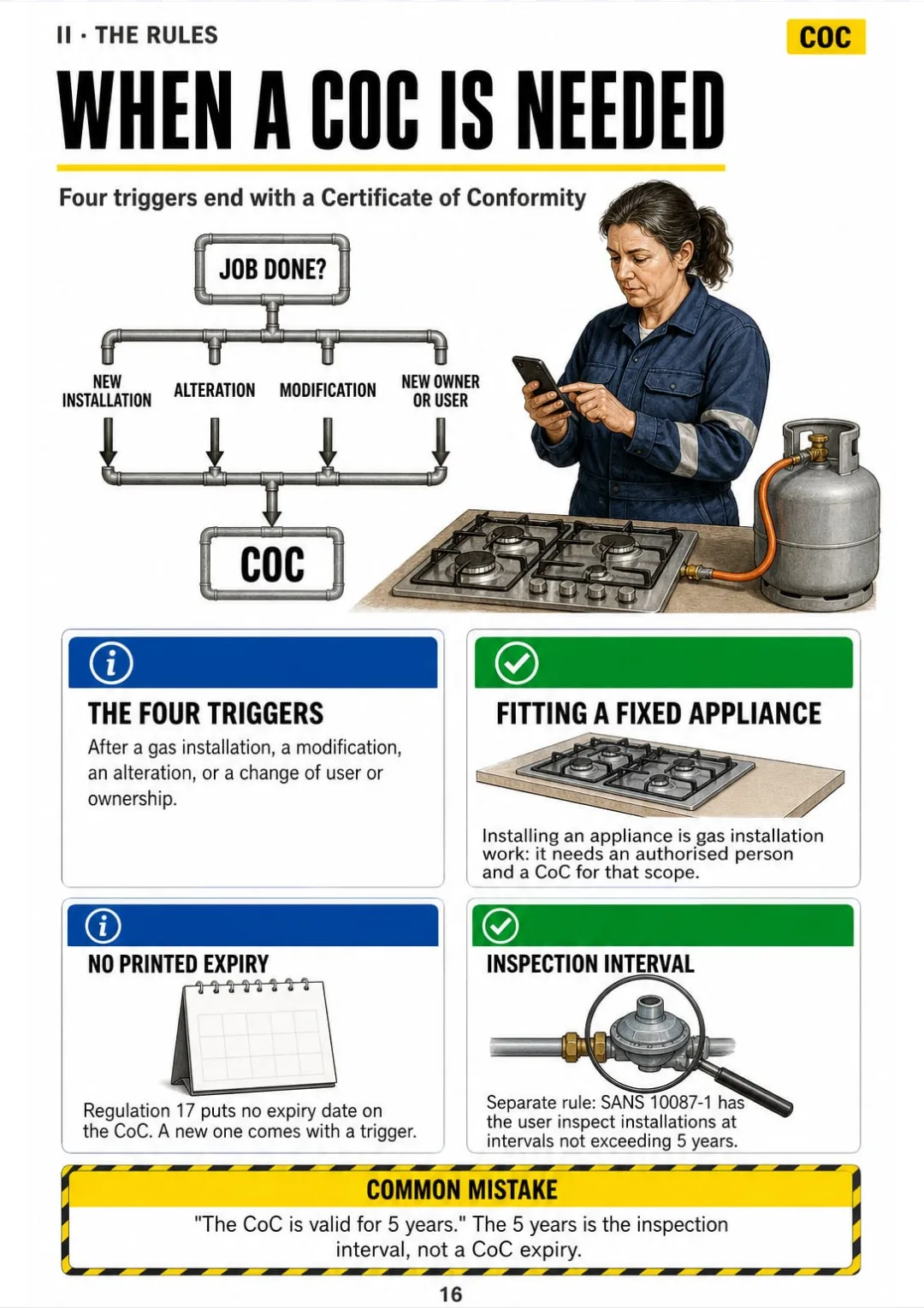
Installation, alteration, modification or change of owner or user: each one ends with a CoC
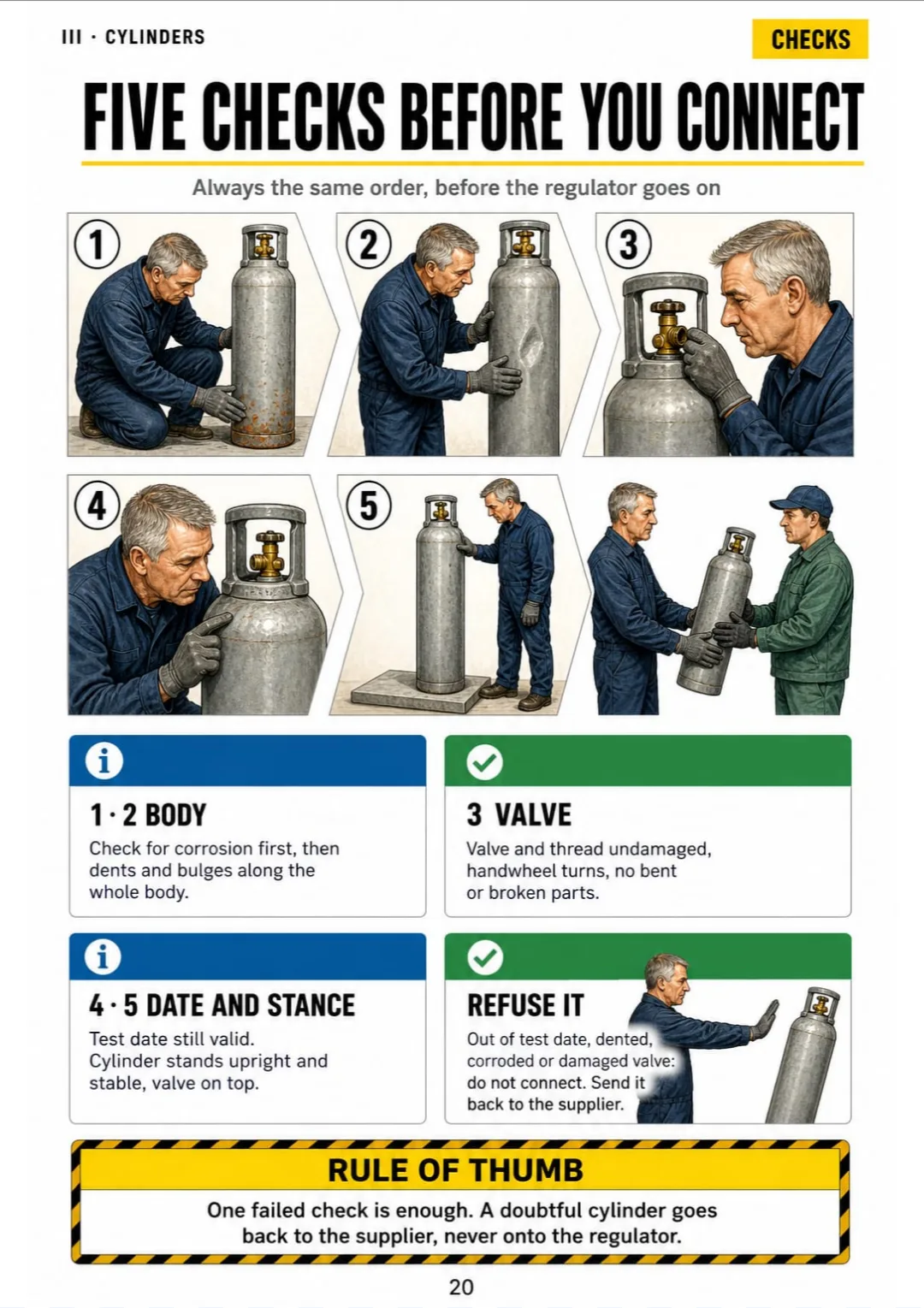
Out of date, dented, corroded or bad valve: the cylinder goes back.
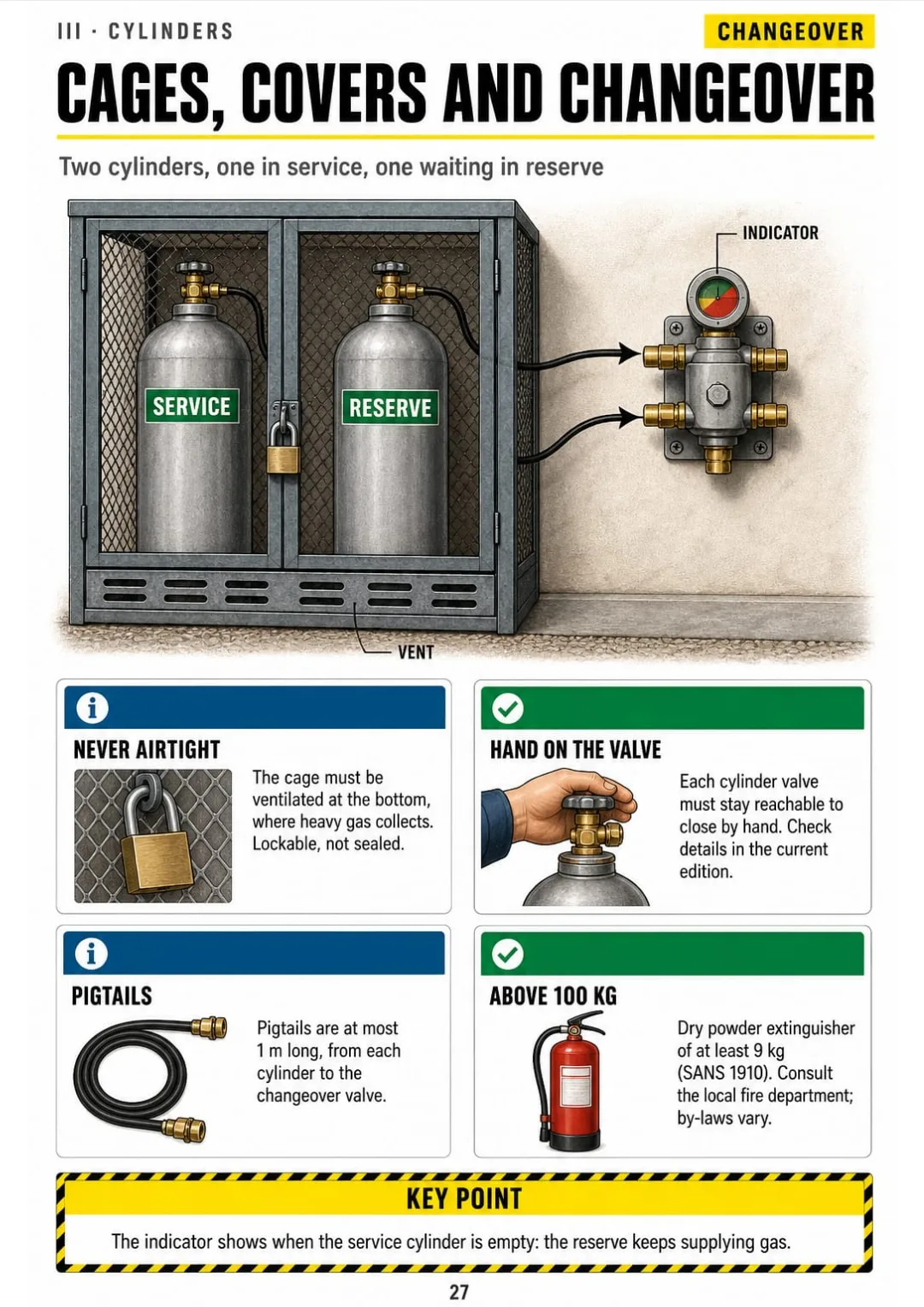
Cage vented at the bottom, pigtails at most 1 m, above 100 kg an extinguisher.
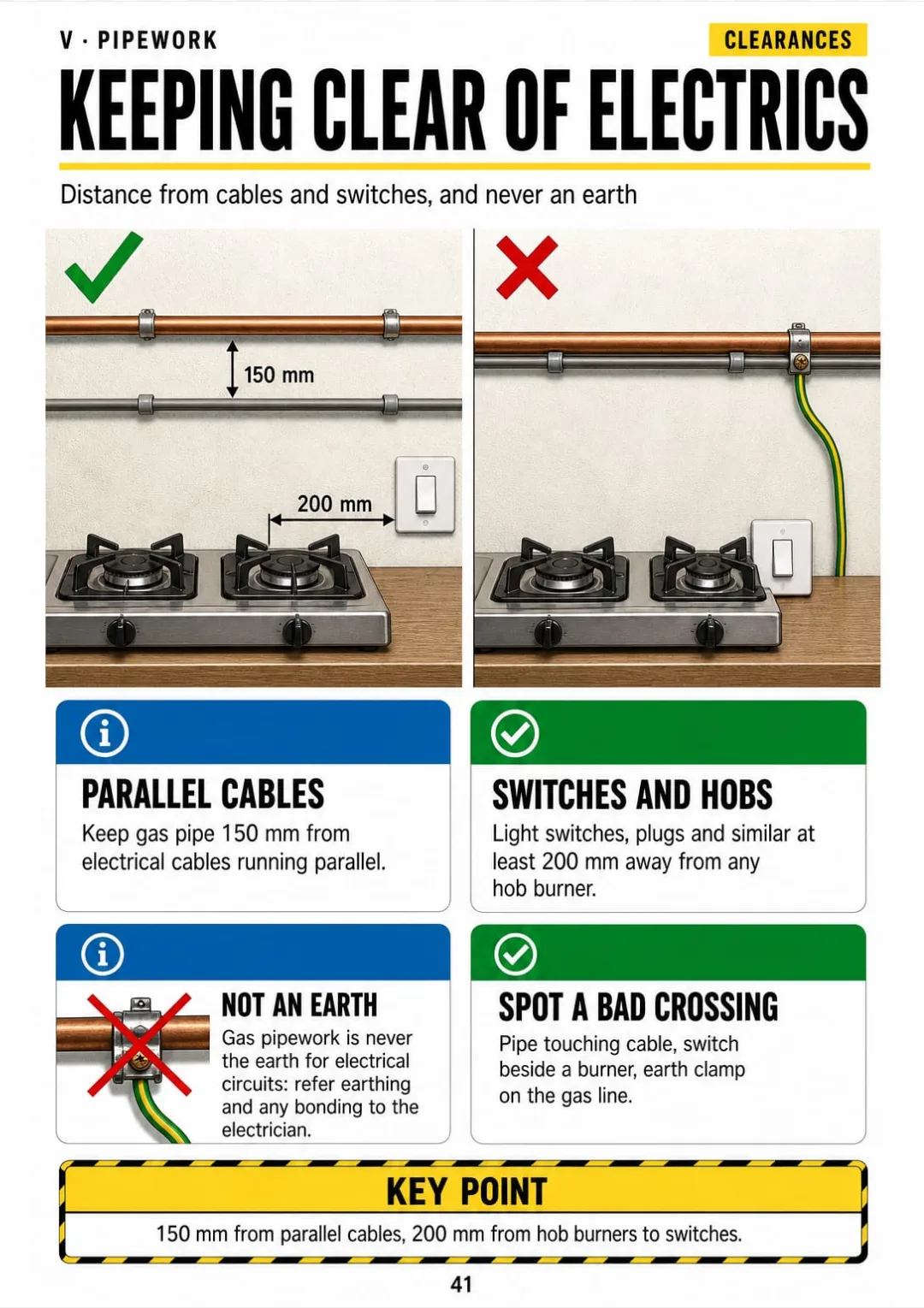
150 mm from parallel cables · switches 200 mm from hob burners · never an earth
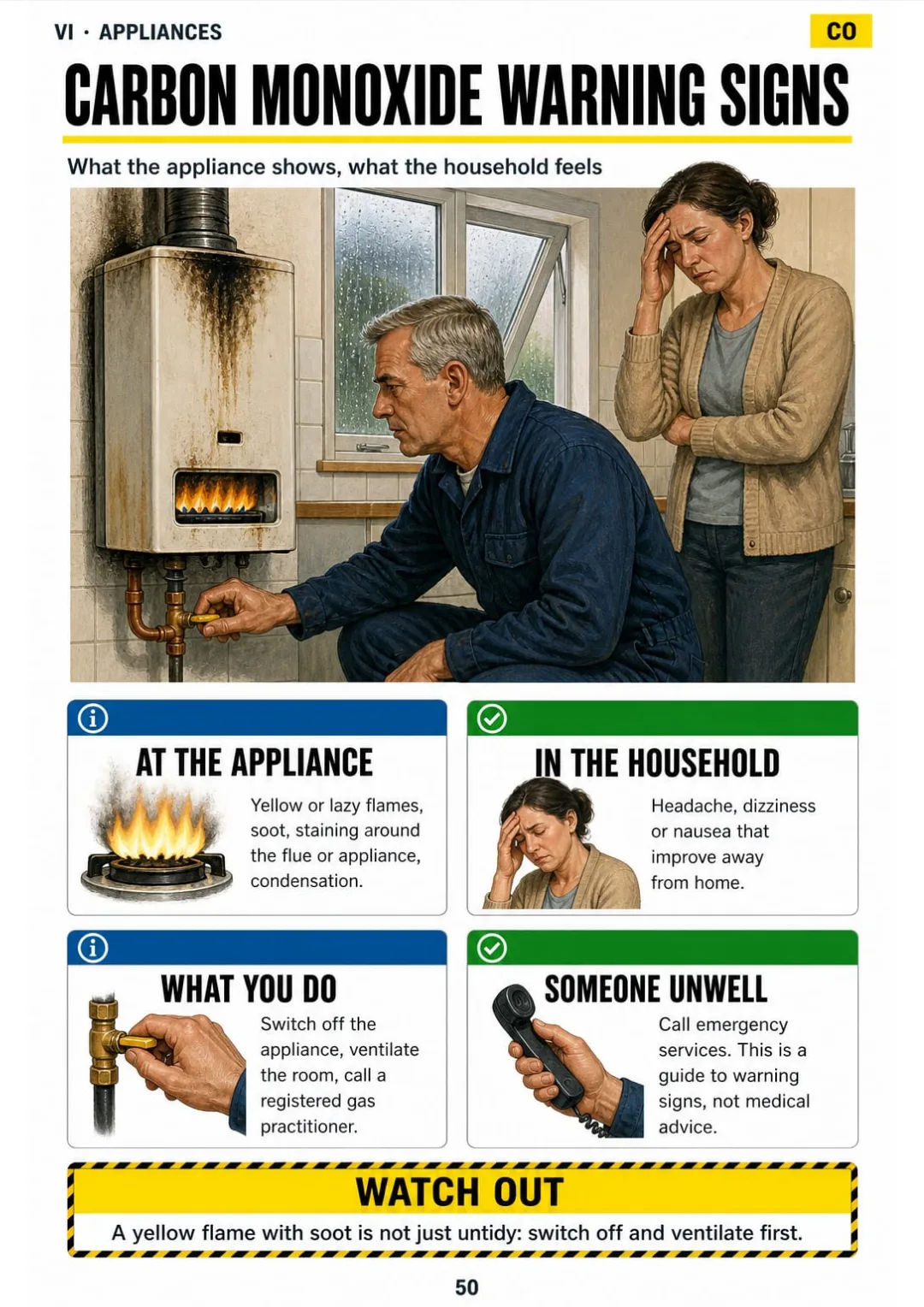
Yellow flame, soot, staining, condensation: switch off, ventilate, call.
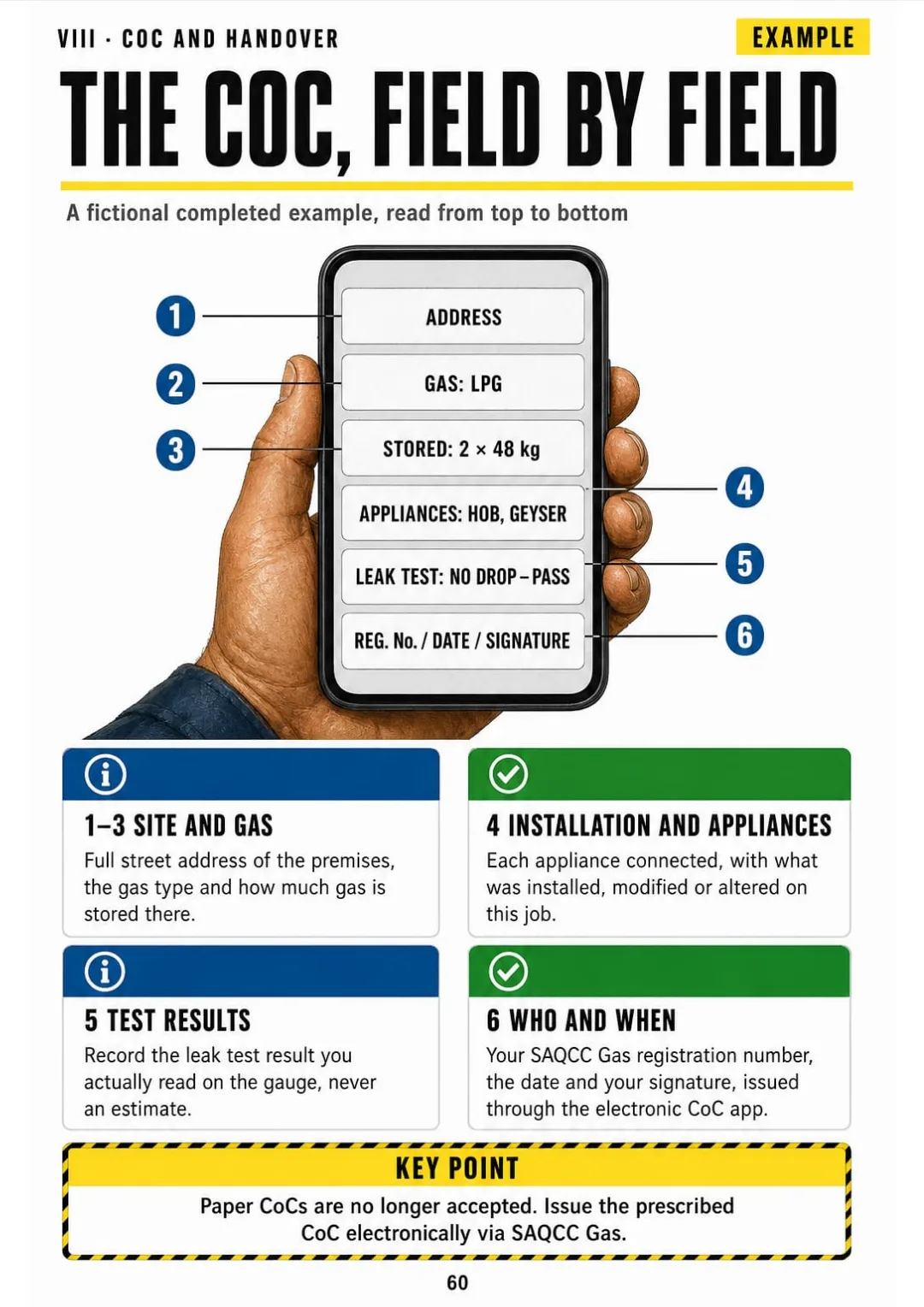
Address, gas and quantity stored, appliances, test result, registration number, date and signature
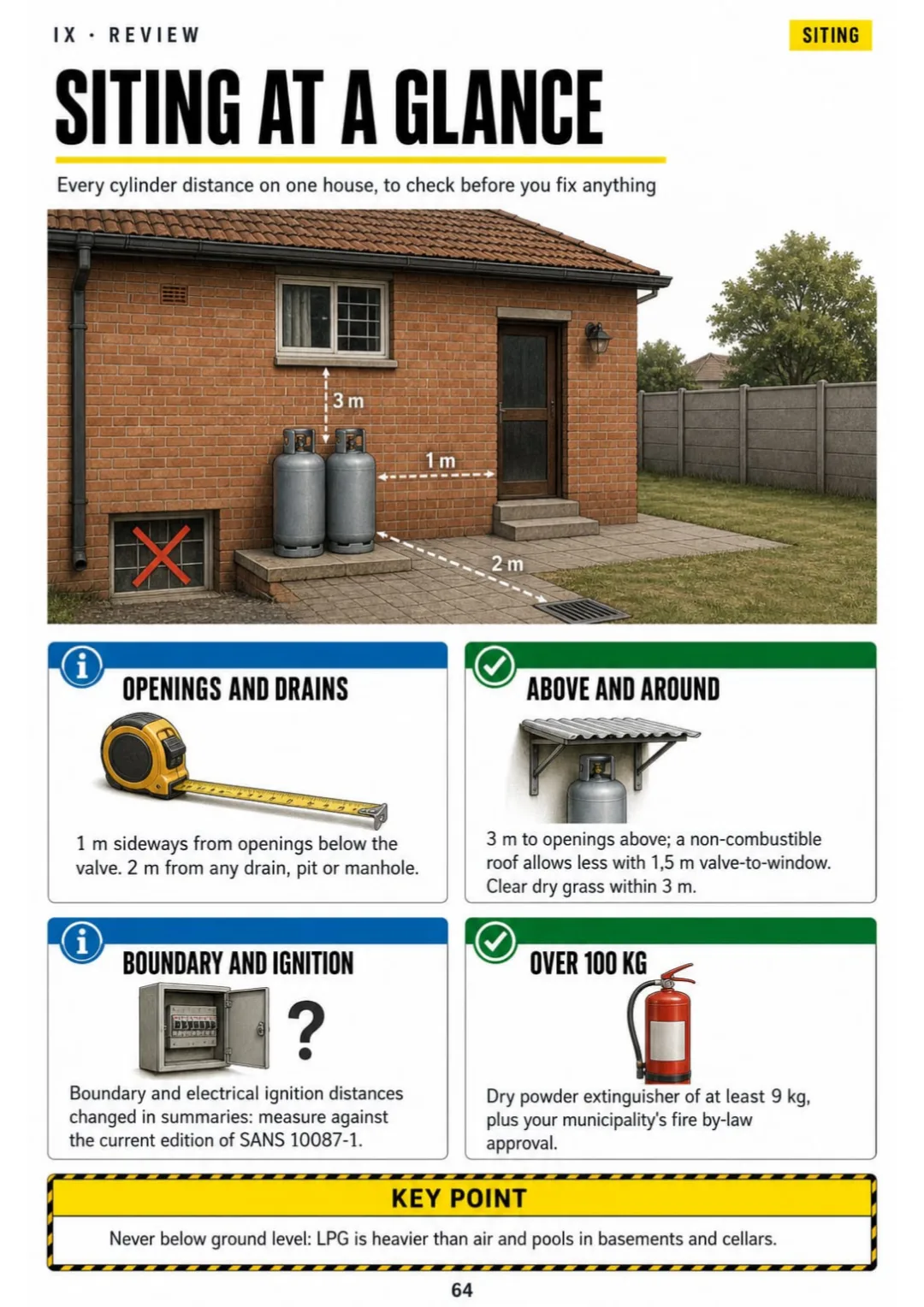
1 m from openings, 2 m from drains, 3 m above, never below ground — on one drawing
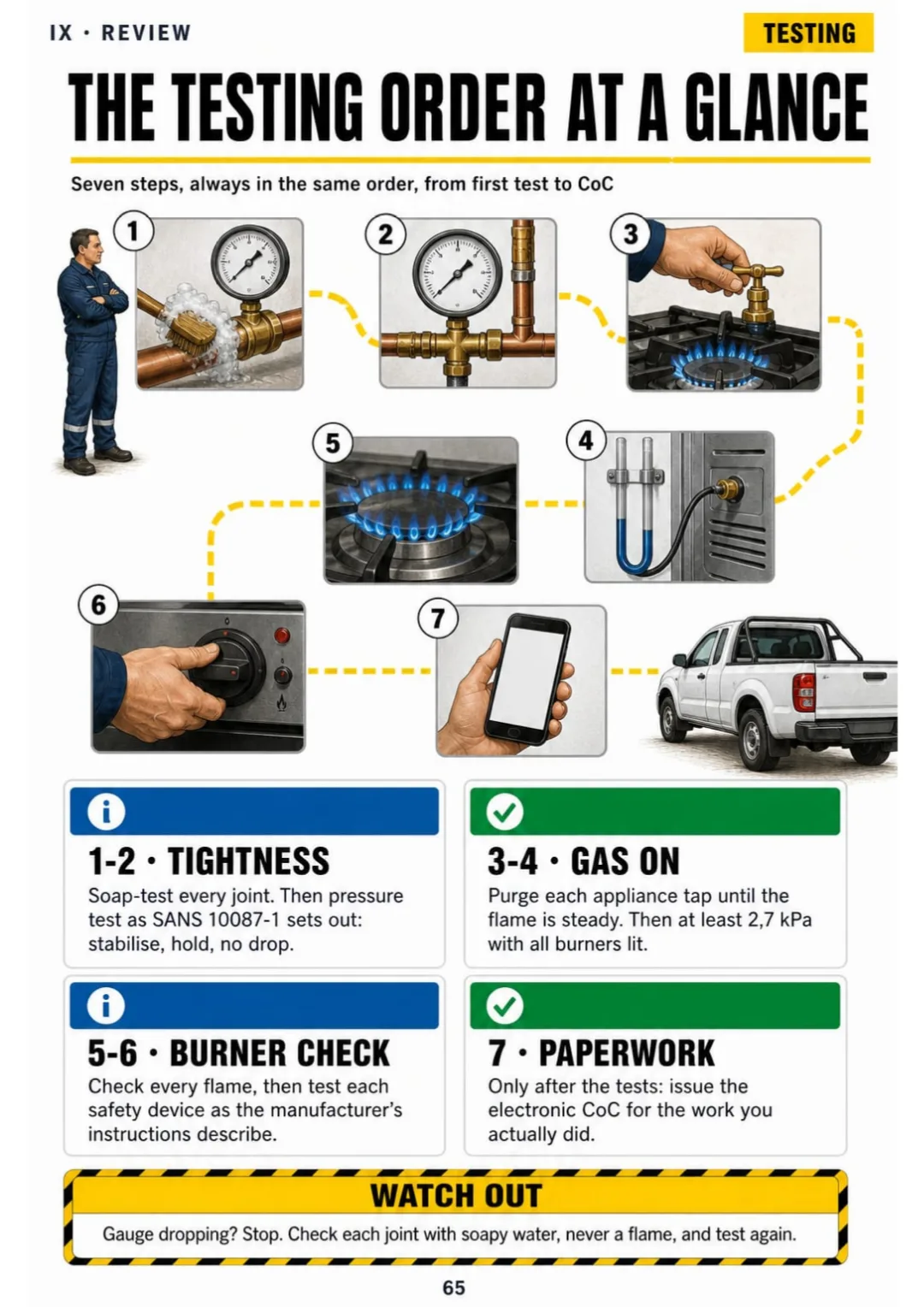
Leak test → pressure test → purge → working pressure → flame → safety devices → CoC

Swipe to see more →

These are real pages from the book. The table of contents is the full one: 9 parts and 64 topics.

The Problem Isn't You. It's How It Was Explained to You.

You're standing next to two cylinders against the kitchen wall. The owner wants a lockable cage and an automatic changeover, and you have to decide where the cage vents and how long the pigtails can be.

You read it last night. But the standard gives it to you in paragraphs: cage, cover, ventilation, changeover, extinguisher, all in one run of text. On site, none of it comes back in the right order.

Cage vented at the bottom, pigtails at most 1 m, above 100 kg an extinguisher.

In the book, that same job is one page: the cage drawn with its vent at the bottom, the two cylinders, the changeover valve and the pigtails marked at 1 m at most. Above 100 kg, the extinguisher is drawn right there next to it.

The same goes for distances from doors, windows and air bricks, drains and manholes, the regulator label, the pipe run along the wall and the leak test: each one has its own page.

You look, you understand, and you know what to check before you fit the cage, and where to look in the standard for the exact wording.

COMPARE FOR YOURSELF

The Same Topic, Two Ways to Study It

THIS
  • The standard: line after line
  • Cylinder checks explained only in words
  • You get to the assessment with doubts
Prior to connection, the installer shall ascertain that the cylinder remains within its prescribed test period, as indicated by the date stamped on the collar or shroud, and that the shell and foot ring display no evidence of denting, bulging, gouging, fire damage or corrosion liable to impair integrity. The valve shall furthermore be examined for mechanical damage, foreign matter and the condition of the sealing washer, and any cylinder failing such examination shall be withdrawn from service and returned to the supplier.
FOR THIS
  • Each cylinder check in one drawing
  • The five checks in a box
  • You see it and you get it
Out of date, dented, corroded or bad valve: the cylinder goes back.
CONTENTS

Take a Look at the 9 Parts and 64 Topics

How LPG behaves, the rules and your role, cylinders and siting, regulators and hoses, pipework, appliances and ventilation, testing and commissioning, the CoC and handover, and a final review: 68 pages, all illustrated

IHow LPG Behaves · pp. 5-11
  1. What LPG Is
  2. One Litre of Liquid, About 250 Litres of Gas
  3. Heavier than Air: It Sinks and Pools
  4. The Flammable Range
  5. Boiling Points and Cold Weather
  6. Combustion Needs Air: 1 to 24
  7. The Smell Is Added
IIThe Rules and Your Role · pp. 12-17
  1. The Legal Map in One Drawing
  2. Who May Install Gas
  3. The Road to Registration
  4. Your Duties and the Owner's
  5. When a CoC Is Needed
  6. Finding Your Way Around SANS 10087-1
IIICylinders and Where They Go · pp. 18-27
  1. South African Cylinder Sizes
  2. Reading the Cylinder Markings
  3. Checking a Cylinder Before You Connect
  4. Outside Is the Default
  5. Distance from Doors, Windows and Air Bricks
  6. Drains, Manholes and Pits
  7. Ignition Sources Around the Cylinder
  8. Never Below Ground Level
  9. Cylinders Indoors: the Limited Cases
  10. Cages, Covers and Changeover
IVRegulators, Hoses and Connections · pp. 28-34
  1. Why the Regulator Exists
  2. Single-Stage and Two-Stage Regulation
  3. Reading a Regulator Label
  4. Matching the Regulator to the Load
  5. Flexible Hose: Rules That Matter
  6. Fittings, Clamps and Left-Hand Threads
  7. When to Replace Hose and Regulator
VPipework · pp. 35-41
  1. Pipe Materials You Can Use
  2. Sizing the Pipe
  3. Running Pipe Along a Wall
  4. Through Walls and Floors
  5. Underground Runs
  6. Isolation Valves
  7. Keeping Clear of Electrics and Other Services
VIAppliances and Ventilation · pp. 42-50
  1. Is the Appliance Made for LPG?
  2. Hob and Oven
  3. Gas Water Heater (Geyser)
  4. Gas Heaters
  5. Rooms Where Gas Appliances Do Not Go
  6. Why Ventilation Is Two Jobs
  7. Low and High Vents
  8. Flues and Spillage
  9. Carbon Monoxide Warning Signs
VIILeak Testing, Pressure Testing and Commissioning · pp. 51-58
  1. Your Test Kit
  2. Leak Test in Five Steps
  3. Pressure Test: Stabilise, Hold, Read
  4. Worked Example: the Gauge Drops
  5. Purging the Air Out
  6. Working Pressure at the Appliance
  7. Lighting and Flame Check
  8. Testing the Safety Devices
VIIICertificate of Conformity and Handover · pp. 59-63
  1. What the CoC Says
  2. The CoC, Field by Field
  3. Who Signs and Who Keeps It
  4. Explaining the Installation to the Owner
  5. Building Your Portfolio of Evidence
IXReview and Common Mistakes · pp. 64-68
  1. Siting at a Glance
  2. The Testing Order at a Glance
  3. Frequent Mistakes on Site
  4. The Numbers to Have at Hand
  5. Checklist for the Night Before the Theory Assessment

One Page, One Topic, All Clear

Think of it this way:

A customer calls: new gas hob, cylinder outside the kitchen. Before you drill a single hole, you need to know where that cylinder can stand.

You open the siting page and see the house drawn from above: 1 m from openings, 2 m from drains, never below ground, all on one drawing.

Yellow flame, soot, staining, condensation: switch off, ventilate, call.

The same with the regulator label, the pipe run along the wall, low and high vents, the pressure test and the CoC: each one on its own page.

LPG Installer Illustrated is 9 parts and 64 topics, all drawn, and at the end, the numbers to have at hand and a checklist for the night before the theory assessment.

What you see drawn, you don't have to memorize.

What's Inside LPG Installer Illustrated:

Ipp. 5-11

How LPG Behaves

What LPG is, how one litre of liquid becomes about 250 litres of gas, why it sinks and pools, the flammable range, cold weather, combustion air and the added smell.

IIpp. 12-17

The Rules and Your Role

The legal map in one drawing, who may install gas, the road to registration, your duties and the owner's, when a CoC is needed and how to find your way around SANS 10087-1.

IIIpp. 18-27

Cylinders and Where They Go

South African cylinder sizes, markings, the checks before you connect, outside siting, distances from openings and drains, ignition sources, below ground, the limited indoor cases, cages and changeover.

IVpp. 28-34

Regulators, Hoses and Connections

Why the regulator exists, single- and two-stage regulation, reading the label, matching it to the load, flexible hose rules, fittings and left-hand threads, and when to replace.

Vpp. 35-41

Pipework

Pipe materials, sizing, runs along walls, through walls and floors, underground runs, isolation valves and clearances from electrics and other services.

VIpp. 42-50

Appliances and Ventilation

Whether the appliance is made for LPG, hobs and ovens, gas geysers, gas heaters, rooms where appliances don't go, low and high vents, flues, spillage and carbon monoxide warning signs.

VIIpp. 51-58

Leak Testing, Pressure Testing and Commissioning

Your test kit, the leak test in five steps, the pressure test, a worked example where the gauge drops, purging, working pressure, flame check and safety devices.

VIIIpp. 59-63

Certificate of Conformity and Handover

What the CoC says, the CoC field by field, who signs and who keeps it, explaining the installation to the owner and building your portfolio of evidence.

IXpp. 64-68

Review and Common Mistakes

Siting and the testing order at a glance, frequent mistakes on site, the numbers to have at hand and a checklist for the night before the theory assessment.

At the end of the book: The numbers to have at hand, the testing order on one page and a checklist for the night before the theory assessment.
Plus: 2 Free Books

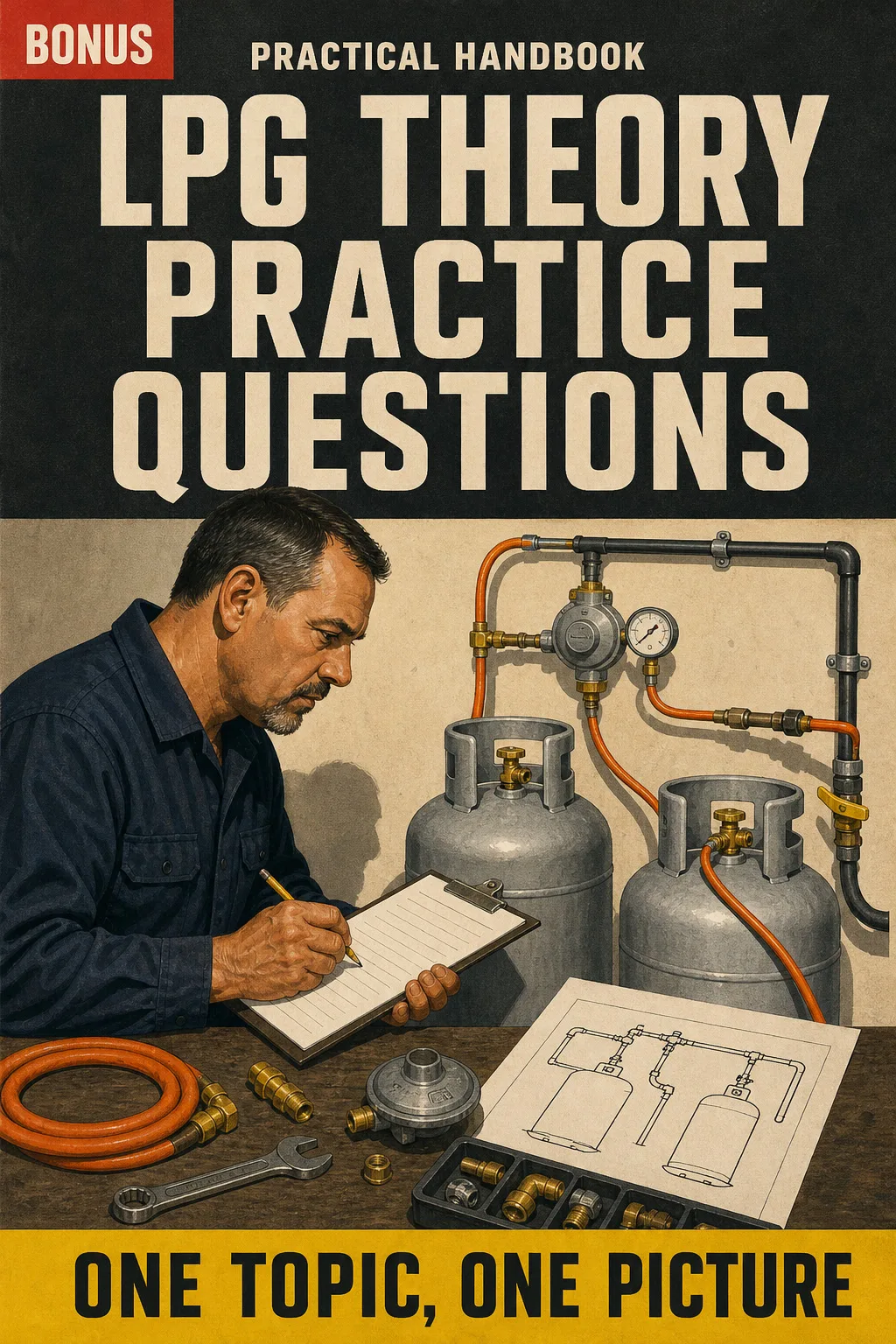
LPG Theory Practice Questions

BONUS 1: «LPG Theory Practice Questions»

Value on its own: US$ 17.90

Exam-style questions on siting, ventilation, testing and the CoC, with the answer and the page that explains it, so you know where you stand before the theory assessment.

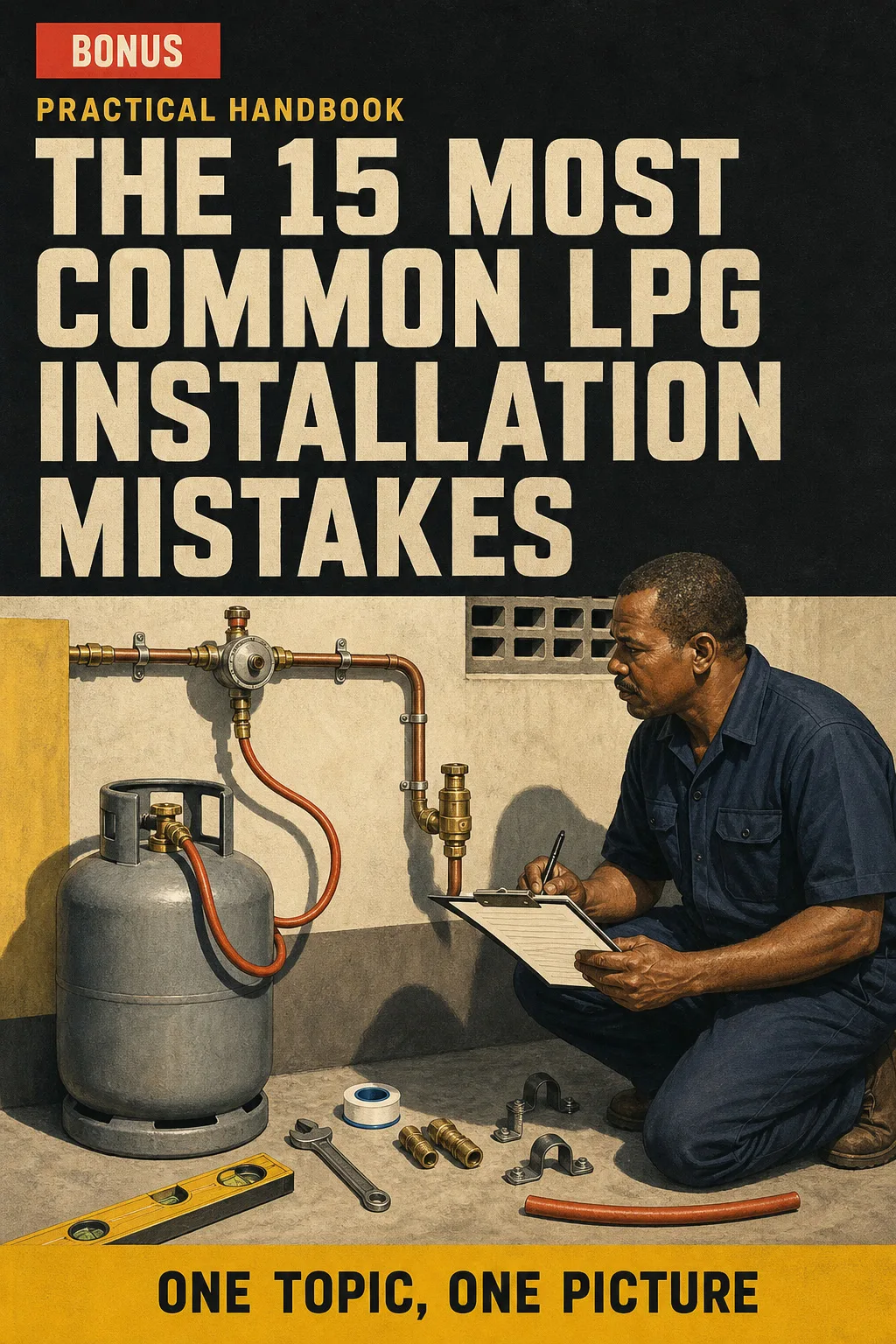
The 15 Most Common LPG Installation Mistakes

BONUS 2: «The 15 Most Common LPG Installation Mistakes»

Value on its own: US$ 14.90

Each frequent mistake drawn before and after, from the hose run behind the stove to the cylinder under the window, so you spot it on site before the owner or an inspector does.

LPG Installer Illustrated with 2 Free Books

  • LPG Installer Illustrated: 68 illustrated pagesUS$ 63
  • BONUS 1: LPG Theory Practice QuestionsUS$ 17.90
  • BONUS 2: The 15 Most Common LPG Installation MistakesUS$ 14.90
  • High-resolution PDF to printIncluded
Total value US$ 95.80
YOUR PRICE:
US$ 27
You save US$ 68.80
YES, I WANT LPG INSTALLER ILLUSTRATED FOR US$ 27

📄 This is a digital PDF book sent to your email: nothing is printed or shipped.

Secure purchaseEncrypted payment30-day guarantee

PDF by email: We email you LPG Installer Illustrated as a PDF, together with the two free books. It's a single payment: no installments, no extra charges.

Who This Book Is For

You're doing the LPG course

You're doing the LPG course

Each topic of the course on one page, drawn, so what you read at night is something you can picture on site the next day.

Your theory assessment is close

Your theory assessment is close

Siting, the testing order and the CoC at a glance, plus the numbers to have at hand and a checklist for the night before.

You already fit LPG on site

You already fit LPG on site

A printed copy in the van to check a distance, a clearance or the testing order before you hand over a job.

Everything You Get Today

US$ 95.80US$ 27
YES, I WANT LPG INSTALLER ILLUSTRATED FOR US$ 27

📄 This is a digital PDF book sent to your email: nothing is printed or shipped.

30DAYS
GUARANTEE

30-Day Guarantee

Try LPG Installer Illustrated for 30 days, bonus books included.

We refund everything if the file won't open, if the book isn't what you see here, if you were charged twice or if the email doesn't arrive. Just email us.

You pay once. No subscriptions.

Frequently Asked Questions

Is it for me if I already fit LPG hobs and cylinders and now want to register?

Yes. It doesn't explain what a spanner is: it puts what you already do in order, with the distances, tests and CoC drawn, so you can revise for the theory assessment and your portfolio.

Where does the content come from?

It is checked against the current South African edition of SANS 10087-1, the Pressure Equipment Regulations and the Occupational Health and Safety Act 85 of 1993. The edition used is named on the first page, so you can compare it with the copy from your course. Everything is redrawn in our own words: the standard itself is not reproduced.

Is it official material?

No. It is independent study material, not issued or endorsed by SAQCC Gas, the SABS, LPGSA or the Department of Employment and Labour.

Does it replace the course?

No. It doesn't register you and doesn't allow you to sign a Certificate of Conformity: only a registered practitioner can. What it adds to your course notes: each topic on one page with its drawing, the distances and clearances on the house drawn from above, the testing order on a single page, and the numbers to have at hand for the night before the theory assessment.
Are the practice questions the ones in the assessment?

No. They are written for this book, each with its answer and the page that explains it. They are not official assessment questions.

When and how does it arrive?

As a PDF by email, to the address you enter at checkout. The 2 free books arrive the same way.

Do I have to pay every month?

No. It is a one-off payment, with no subscription.

Can I have it on paper?

It comes as a PDF, not as a printed book, but it's made to print: at home or at a print shop, so you can keep a copy in the van.

How does the refund work?

You have 30 days. We refund everything if the file won't open, if the book isn't what you see on this page, if you were charged twice or if the email doesn't arrive: just email us.

Before You Close This Page

No more rereading without anything sticking.

The siting distances: you see them drawn, and that's it.

You get to the theory assessment knowing where everything is.

Drawings make studying faster.

The book is right below.

One-time payment: US$ 27 · Guarantee: 30 days · PDF by email

YES, I WANT LPG INSTALLER ILLUSTRATED FOR US$ 27

📄 This is a digital PDF book sent to your email: nothing is printed or shipped.